Monday, January 5, 2015

NCSS 2015 - Day 2

Thank you to Afrank99 Creative Commons Attribution-Share Alike 2.0 Generic license
Lecture 2: Going over the C required to make the Arduino do our bidding. A bit revision for me... The Arduino has two necessary functions void setup() and void loop() but you can add more. The setup function allows you to define how different pins will perform. The loop function allows you to define what happens over and over again (all the Arduino can do once autonomous is do the same thing over and over again.) You can nest other loops but once it's got to the bottom it's going back to the top. This explains the need for delays from time to time. 

Lab 1: Beginner circuitry. Hooking up a breadboard, powering an LED, Blinking etc. It was a bit basic. The extension activities had us reading and writing to the serial port which requires the USB cable at this stage but I believe it will be applicable to the Bluetooth portion of the project.

Lecture 3: New Stuff! I encountered some entirely new material! We learnt about polling versus interrupts. The whole time I've mucked around on Arduino this would have been brilliant to know! My Baby Groot project may now be one step closer to fruition. They then did a bunch of conversion of number systems. Finally, we wrapped up learning about volatile variables another crazily useful thing to know. Time to get stuck in!

Lab 2: #TECHWARNING We used a switch to manage an LED programmatically rather than simple circuitry and sent messages to the Serial at the same time. We then implemented a Binary counter for a nibble (half a byte) using 4 LEDs, incremented on the button press. This was a little dodgy, the Interrupt was bouncy and we needed a delay of 200 milliseconds to get rid of the fluctuations. There was some discussion about smoothing the signal with a capacitor.
Source: http://www.texample.net/tikz/examples/seven-segment-display/
I'm really enjoying talking to the tutors about these problems because when it's just you and the internet you can hack workarounds to problems that aren't really best practice. Was just about to adjust the counting program to work for a 7 segment digit display when a teacher meeting was called. D'Oh! I will master you tomorrow 7 segment digital display!

Important stuff learned:
Serial.Read - http://arduino.cc/en/Serial/read
How to write functions - http://playground.arduino.cc/Code/Function
Gangnam style had so many views it caused an overflow error! Not up on internet culture.
There is code for a seven segment display on Nerd Club (http://nerdclub-uk.blogspot.com.au/2013/05/messing-about-with-7-segment-displays.html) but I won't be reading it until I've succeeded.


Evening Activity: Trivia - All students in their teams from the camp, teachers in a team together, tutors in a team together. We came second last and they came last. There may have been some weighting of the answers.


Memorable moment: Making unauthorized newspaper costumes for our 30 second rendition of the complete Lord of the Rings trilogy (subtitled -how long the Lord of the Rings trilogy would have been with all the boring bits taken out)

Murder Game: Still alive!
Murders performed: 2 (today)
There's not many of us left now so I have definitely earned some cred from last year. Paranoid!

NCSS 2015 - Day 1

This image was originally posted to Flickr by
SparkFunElectronics at
http://flickr.com/photos/41898857@N04/8406865680. CC BY 
New Year's Resolution - Restart Blog!

Easy to say but tricky to do without something to write about. Hang on a second! I'm hanging out with geeks for 10 days as part of NCSS 2015.

NCSS stands for National Computer Science School. It's a 10 day programming course for Year 11 students (+some kids returning from last year +some overly keen teacher) with two streams Python and Embedded (arduino).

I was here last year doing the Python stream to help me support my senior kids at school, this year I get a go at Arduino robotics.

Day 1: arrived late. I had a uni assignment due that was still being typed when I was supposed to be here for the teacher briefing. (Please forgive me fellow teachers, I promise to make it up.)

First Lecture: Introducing sensors, actuators, processors and have a look at the hardware. To be honest I was a little worried at this point because last year I was really learning from day 1 and this was pretty basic stuff. Have been promised it gets harder FAST!

First Evening Activity: Build the tallest tower that can support a shoe using nothing but newspaper (no not even tape). Our team went with the high risk, high reward strategy that resulted in a pile of newpaper and a shoe about knee height above the ground. :-( May have to conduct experiments at home to do better next time.

Murder Game: A game where you have to "kill" a fellow camper by saying "You're dead!" without being overheard. Last year I died in the first night's activity. This year I am proudly still alive. Murders performed: 1

All Fall Down - Source
https://twitter.com/katrinapuranik/status/551741852085280769/photo/1
Thanks  


Saturday, July 20, 2013


Graffiti Creator
This is a fun, no login necessary, way to create titles with a Graffiti style for projects. It doesn’t do much other than make pretty cool text but the kids like it.

PiktoChart (Data Visualisation)
This is a great way to create Data Visualisations. These are printable posters that display large amounts of data pictorially with graphs and size comparisons. It’s pretty easy to use but you do need to sign in.

Google Fusion Tables

This one is perfect for the scientists and social scientists; it’s a bit tricky to use but worth the effort. You and your studnets can create interactive maps with images and data by putting information into Google Fusion Tables. The link is to a tutorial to follow (I thought just linking to the tool itself would not be very useful) and please ask if you want to use something like this in class.

Blooms Digital Taxonomy the Wiki

This is a great site that teachers from all over the world contribute to. It is teachers ideas of how to implement Bloom’s taxonomy in a digital world and has links to other tools that you can use in the classroom. The great thing about this site is that it is a community of teachers and learners and you can contribute to the community youselves.

Interactive, Media Rich Timelines

This gorgeous website allows you (or the students) to create timelines where each point in time includes any combination of text, graphics and video (youtube). It allows the students to visualise the distance between events in time. You can even upload the data in spreadsheet form.


Wednesday, June 12, 2013

The Future Project - iMind: Our evolving mind

Last night I went to The Kings School for their forum on Our Evolving Mind. It was part of a series of forums and presentations for The Future Project which is a collaboration between Kings and Macquarie University and the winner of NAB Schools First grant for Seed Funding in 2012. 

Professor Ian Hickie Executive Director of the Brain and Mind Research Institute and Associate Professor Jane Burns from the Young and Well Cooperative Research Centre spoke about the adolescent brain and the impacts of technology and social media on the brain. 

The introduction asked one main question, is the teenage attraction to social media, alcohol and sleep deprivation bad for the brain?

The night was split into a section for presentation and then Q and A. Professor Hickie was first. He outlined the new thinking of neuroplasticity that shows that the brain is able to grow and change and learn throughout our lives. However he points out that the majority of connections are made in childhood. As a constant learner I was slightly upset to hear this (slightly obvious) news because I think I don't have enough time left to learn everything I want to learn and I wish I had some wasted adolescence left.
He then showed data on the tops 20 mental health issues for teens, both girls and boys and of these three categories are very highly represented. They are anxiety (number 1 for girls), psychotic disorders (higher for boys) and substance abuse.

I loved that Professor Hickie came with a positive message on technology. He sees the possibilities of technology in addressing teen positive mental health. He sees technology as an important medium for reaching teens because that's where they are but also for overcoming some of the isolation associated with being a teenager and feeling misunderstood. He addressed some of the concerns on gaming but feels that isolated gaming is far more worrying than social gaming because there are positive mental health stimuli coming from social gaming.

He pointed out that of the three dangers for teens raised in the introduction overuse of alcohol and sleep deprivation are far more dangerous for mental health than social media. He showed that binge drinking has a negative effect on the brain even over short periods of time, not necessarily after extended periods of overuse of alcohol. He also showed that sleep deprivation was very detrimental to learning. To all of our HSC students staying up all night before an exam to study, according to Professor Ian Hickie you might as well not have studied at all for all the good the all-nighter did you. Our brains need sleep to process information. As someone who only got through university three times by staying up all night to finish assignments, I stand by the fact that it you don't have to recall anything, the all-nighter has its place (I am willing to conceded, however, that planning life so that the assignment is complete before the due date might be marginally better but in my case so far unachievable).

Associate Professor Jane Burns showed us some data hot off the Young and Well presses. There is a new species called Technosapien. They released the results of their survey of 16 -25 year olds and showed the following info-graphic:
The thing that Jane drew our attention to was the fact that young people don't make a distinction between socialising online and offline but that it's just socialising. She also said that some of the common myths, such as that online gambling is rife amongst young Australians, is simply not true. Only 6% of young people apparently gamble online. She said that the power of technology comes from what it allows students to do. She used the example of her own son who has special needs and his ability to communicate through an iPad. The only concern she raised from the data is that it seems that too many young people are using technology after 11PM and that that contradicts the recommendations for brain performance.

The best thing that came out of the night was the agreement between the two experts that we should stop telling teens what we define as use and overuse. We should sit down with the kids themselves to determine the rules for what is reasonable in a given situation rather than imposing draconian, top-down guidelines on them. Especially as the teens probably know, more than the people trying to impose the rules, exactly how to bypass them.

My key take away was Jane's wrap-up comment "Technology is not to e feared and ignorance breeds fear".

I'm thinking our parents need to know some of this stuff, now how to get the information to them...

The night was well compered by Matthew Jacob.

Monday, May 6, 2013

TedxSydney 2013 - Mind = Blown

Thanks to TEDxSydney for the use of their image.
Mine didn't turn out like this.
What better reason to restart this blog than to report on the amazing experience that is TedxSydney. 
I've been the last three years and love every second of it. Even the conversations with people about that-one-talk-that-we-didn't-really-agree-with is engaging. 

It's very difficult to recap 13 hours (yes, actually 13) in one post so I'm going to do a short-short version of some of the talks, a recap of the best ones and reserve the ones that actually relate to EdTech and my world for future posts which will involve some editorialising on my part. 

Firstly, I have to mention the food. TEDxSydney did something amazing for the catering for the day. They sourced produce from the audience's backyard vegie patches through Grow It Local. This meant that the chefs didn't really know until the last minute what they would have to use to cater for 2200 people. It was explained to us by the organisers and then retweeted by the fabulous @MarkScott as "It's not a catastrophe, it's a mystery". Read all about it here. It really was an amazing and highly successful undertaking.

The only negative of the fabulous Opera House as a venue is that with a different catering point at either end you often got the feeling that the other end was moving faster and getting fed sooner. At one point we swapped ends and lines only to wait another extraordinary amount of time. After learning that lesson we decided to get a bit more Brittish and celebrate the opportunity of the line to get a bit of a chat happening.

Before I go on to recapping the amazing talks I want to shout out to the audience contributions. Gretel Killeen compered 15 audience members sharing their 30 second "idea worth spreading". Some of them won't be mentioned because they weren't stupendous (but honestly, props to everyone who got up there) but here are the best ones. 

Lawrence suggested that we should abolish  formal university assessment in order to encourage risk-taking, diversity and creativity. He got slammed a bit in the twitterverse because I think people thought he just wanted exams abolished so he didn't have to work so hard but he explained that as a university tutor, he believed that exams and cramming are detrimental to the values of academia and I tend to agree. There has to be some more discussion on this kind of idea, maybe we should steal for our schools for similar reasons. Bring on peer and self assessment.

Julie thought we should all sing more because it makes us happy and we're all good at it until we're discouraged at some point in our lives.

Chris thinks that we should teach 6 year olds how to program computers. He equates programming with teaching a computer to think and since we all know that teaching something to someone is the best way to learn it, the children will learn to think in ways ungraspable now. It's an interesting point.

Jeanie thinks the country and the world will be a better place if we all took in a refugee as a flatmate. She says that the best thing about it is how much she learns about another culture and by extension herself.

Lisa thinks that mandatory labelling to show the source of all elements of fashion will allow us to make sustainable decisions and might avoid disasters like what hit Bangladesh last week.

Jimmy wears an extraordinary beard to encourage all of us to get skin cancer checks. It's a good idea but the problem is I know someone who's trying to get a skin check at the moment and can't get an appointment. - Dodgy!

The Speakers - the short short version
The Day was kicked off by Professor Ron McCallum. His moving talk which keeps replaying in my mind was arguably the best of the day. He spoke simply and clearly about his life achievements despite blindness from birth. The power of his speech was in his passion for his assistive technologies and his positivity about all aspects of his life. His talk will be discussed in more detail in a later post.

Alice Gorman then encouraged to claim cultural ownership of shallow space. She thinks that the space junk in close orbit around the earth as well as probes we have left on Venus and other places in our Solar System hold human cultural value and should therefore not just be shot out of orbit for convenience.

Jennifer Robinson was one of the amazing people who makes me feel completely inadequate. She has achieved in her reasonably short career some human rights coups. She is passionate about raising awareness of the plight of West Papua and I respect her tenacity and devotion to this cause.
Quote from Nelson Mandela "It always feels impossible until it's done."

Simon Jackman talked about the "presumptuous juxtaposition of words" that is "Political Science" He had some very interesting ideas about the Data revolution, big data and the impacts on democracy. His talk requires further discussion and not just because I'm a bit of a data nerd.

Danny Kennedy loves solar. He talks about the changes in his approach to word-changing activism over his life-time and concludes that maybe rather than preaching at people they need to state messages the population wants to hear and work with the "enemy" - the big energy companies. It appears that he's making progress with this approach and I am determined to be one of the huge number of Australians attaching panels to their roof asap.

Lisa Murray has interesting ideas about our future memories regarding born-digital information. This is too important an issue of my life and work to be dismissed in a paragraph so this idea will be getting its own post soon.

Bill Pritchard spoke about famine and undernourishment and the cycle of Livelihood, Capability ad Entitlement. The most important point he made and one that makes us feel impotent is the "Viscious Cycle of Unfreedom" To buy good food you must have a job, a good job requires a healthy body and a good education, a good education relies on strong brain development and strong brain development and much of the requirements of a healthy body are dependent on in utero nourishment and nutrition. This is unbelievably sad.

Joost wants us to rethink our buildings and our cities and is regularly showing us exactly how to do that. We should be growing food on top of our houses. Sustainable design makes so much sense in a country like Australia. Why do we have little boxes with red tile or colourbond roofs stretching to the distance? we have sunshine, soil and enough rain. Our city and suburbs are  built on prime growing plains. How do we influence businesses and governments to build projects with these principles in mind.

Marc Newson's conversation was a little disappointing because I expected to learn so much. He said at one point that he thinks that all designers should be preoccupied with longevity and that he has no interest in the disposable. In this day and age I think that discarding the disposable as not worthy of good design is a mistake. Design is just good problem solving and we wer surrounded by ways that TEDx was trying to improve sustainability with good disposable design.

Andrew Parker blew my mind. The idea that colours is often caused, in nature, by a system of defraction gratings or nanostructures that we don't fully understand but can copy for use in products is unbelievable. I've been happily meandering through life choosing clothing and products completely unaware of where that illusory colour came from. I need to do more research into this stuff because I think it will inform my digital design. I just wish I'd been able to find Andrew Parker to ask him the question I was sent to TEDx by my sister to ask... "What is it about a dog's eye that means it can't read red in it's environment?" I guess I'll have to rely on Google.

Omar Musa was musical as always. I loved that he transitioned from conversing pleasantly with the audience to fabulous rhythmic phrases about where he grew up. "An alphabet of exiles, far from place of birth." Perfection.

Marita Cheng is a cutie and she's one of my people - teaching girls how to work robots and understand engineering and making. Anyone encouraging girls into the "boys subjects" is alright with me. I credit her with the great line that gave my the title of this blog post. 

David Sinclair is pretty excited about being pretty close to developing a pill against aging but since it basically does what eating less and excercising more does, maybe it should be called the Lazy Pill.

Damian Mander asked what we were going to do to alleviate animal suffering. 

Rebecca Huntley was fascinating about the labelled boxes we don't like to be put in - "I'm not a consumer", "I'm not a battler", "I'm not rich" - but love to put others in. What she's discovered through her study of all of us through social analysis is that we have more in common than we think and that she feels she should spend her time identifying the similarities rather than the differences.

George Khut talks about using our bodies, technology and art to increase wellbeing. I loved this talk because of the mesmerising colours but also because it's part of a larger discussion of how technology can assist our wellbeing rather than be always detrimental to it as is usually reported. I will be exploring this more soon.

Finally, but one of the most impactful talks, Paul Pholeros spoke of the simple solutions he's bringing to indigenous communities or villages in Nepal to improve health with improved housing. He is really making an impact on real people on the edges of real poverty in our world. He has improved cases of "developing world" diseases in our aboriginal communities - oh the shame - by reducing flies and dust and fixing showers, electricity systems and fixing toilets. Astounding! How do I give this man money/time/awareness?

So that's the short version. I will be posting over the coming days about my favourite and most pertinent talks and how they should impact my teaching life. What an amazing day. I will keep going for as long as they still have me. 

Thank you to the whole team.


Saturday, June 4, 2011

TEDx Sydney 2011 - Mind Awakening

This year through a process of application and a huge dollop of good luck I was invited to be a delegate at the TEDX Sydney Conference. It was held on 28th May 2011 at Carriage Works in Redfern and it was like a jolt of electricty to the brain. I, like Frankenstein's monster, felt brought to life. (Sorry Mary Shelley)


TEDx is the TED franchise which means that other countries can use the TED format from the US in their location. From the TED website "Each year, the world's leading thinkers and doers gather in for an event many describe as the highlight of their year." This was TEDx Sydney so it had a definite Sydney flavour.


The conference was kicked off with the best, most accessible welcome to country I've ever heard. Usually, this part of an official day is ignored as being an uninspiring necessity. I only raise it this time because it was remarkable in its depth and I felt part of the sense of place. Thanks to Michael West (http://www.guwaali.com.au ) for this experience.

Tjupurru was the opening act and was amazing in his redefinition of the one-man-band using technology and the didgeribone to create astounding hip-hop flavoured music (http://www.youtube.com/watch?v=8MfV8fo0dDo&feature=related ). I will list the other musical performances in the schedule and will link to some of their work but will leave the review to those who have some training in music appreciation, I have the appreciation without the training.

The schedule for the day looked like this...

SESSION 1

8:45AM to 10:30AM

SESSION 2

11:00AM to 12:30PM

SESSION 3

2:00PM to 3:30PM

SESSION 4

4:30PM to 6:30PM

After researching and writing that schedule I've realised that I can't possibly do all of those people justice so I'll link to most of their work and provide a summary for my favourites which tend to be the ones that relate most to the theme of this blog anyway. These were Genevieve Bell, Saul Griffiths, Drew Berry and Richard Gill.

Richard Gill (http://www.smh.com.au/news/entertainment/arts/the-young-persons-guide-to-the-orchestra-8230-is-lacking/2009/09/01/1251570708614.html) is a composer and music educator who you might know from his contributions to ABC's "Spicks and Specks" program (well that's where I first heard of him). Richard spoke of the need for performing arts in the education of young children and especially music (he happily identified his own bias) "Every child should have access to properly taught music in the hands of a properly taught teacher." He talked of the instinctual way in which humans communicate through music and how children should be able to have time to create their own sound and music through song long before they have the discipline to learn music in a structural way. "Music does not describe, narrate or tell stories. Music evokes, suggests and implies and opens up the mind of a child in an extraordinary way."


The thing that most struck me was his finishing point which was that having a teenage child come to you with a composition who says "Look, I made this myself!" with the tone that dares you to find fault with it was the best thing in the world. I think that he needs to realise that that is the joy of all teaching and what we should be designing our educational system and especially our teaching programs to attain, regardless the subject matter.


Genevieve Bell (http://www.heraldsun.com.au/technology/switched-on-world-is-killing-creativity-expert-warns/story-fn7celvh-1226064491905 ) is a corporate anthropologist (seriously, this is a job!). She was talking about our need to switch off from the constant demands of the internet and be bored. Her theory is that boredom is more than just resting or doing something fun and for one's self. She spoke of Heidegger revelling in being stuck at a train station for four hours (http://www.stephenhicks.org/tag/heidegger-on-boredom/ ). It appears that boredom - the state of disengagement - allows the brain to meander in a way that simple rest does not. Genevieve believes that our device-driven world is designed to completely avoid boredom. This is not a good thing for the growth of ideas and creativity.

I find it hard to hold the juxtaposition of Genevieve telling us we need to be bored and working at intel whose business revolves around us buying those devices but I think she works to represent the wants and needs of regular people to the intel corporation.

Here's her on the future of the internet… http://www.youtube.com/watch?v=DAcooO23OaY

I think her ideas on having time for switching off are really applicable in the world of technology in education. We need to allow the students space to let their minds wander and really tap into their creativity and let their mind have new ideas and make new connections. It's a lovely circular idea that we have to allow the kids to become disengaged in order to foster their future engagement.


Drew Berry is a legend. He appears to have cut out an unique role in science. He takes unobservable things like the replication of DNA and builds complex, elegant, 3d animations of these processes. These are used to educate non-scientists about these amazing procedures. He has managed to create a role for himself which plays to his strengths in science and his interest in graphic design. He's fascinating. I love that it is still possible in this world to do exactly what you want to do. Here is some of his amazing work… http://www.youtube.com/watch?v=7wpTJVWra7I


Saul Griffith (http://www.ted.com/talks/saul_griffith_on_everyday_inventions.html ) wants us to make the future awesome again. He's an inventor, TED regular and expert on sustainability. He's currently working on using amazing kites to generate electricity (http://www.ted.com/talks/saul_griffith_on_kites_as_the_future_of_renewable_energy.html )

He spoke about how society's view of the future has changed over time. In the past our view of the future included the Jetsons and their robotic maid and Tintin and his voyage to the moon and undersea adventures (hence the blog image).

In contrast, our current view of the future is dystopian and not a little scary. The world is going to warm, flood, be reduced to war over the remaining energy and water. He considers this change in projected future to be a crisis of human imagination. We need to break the bounds of our negative self-talk and once again find a positive, exciting and awesome vision for the future. Something we can all be excited about working towards.

He reminds us that the most efficient forms of transport are roller-coaster and zip line… what can be more awesome than that?


Now, if only we could find something really boring to do so we could start all these wonderful ideas. One thing's for sure; TEDx wasn't it!

Tuesday, May 10, 2011

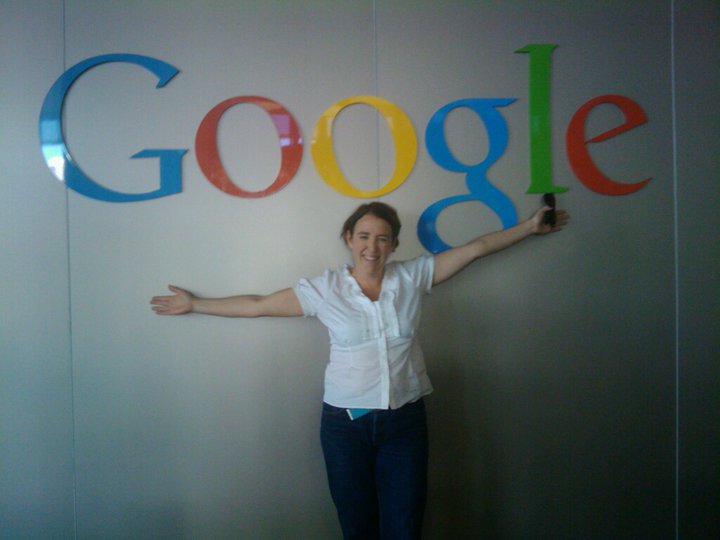
The Google Teacher's Academy


In the last week of the holidays (what already feels like months ago) I attended the Google Teachers Academy. I know I've been tardy in writing about it (apologies to my three dedicated readers :-) but I wanted to let the experience mull before I worked out what the value was and how to pass that information along.

The plan for the day (there was a second part day that was an optional unconference but more about that later) was a pyramid scheme for training. Attendees were shown a flythrough of Google Tools at a cracking pace so that we could all go home and investigate further and then redeliver much of this training at a more sedentary pace to our colleagues and community with a view to expanding Google's market. This sounds a little cynical but I'm not. It was a wonderful experience and being a generally busy person it was nice to have the time to explore some of the labs projects and new features that I had on my ToDo list to explore. I also think that unlike in sales (where it's usually considered a scam)a pyramid scheme works really well for training and in a perfect world reaches an extraordinary number of people.

The tools we covered were Google Search (inc books, scholar, news archive and wonder wheel), Google Sites, Blogger, Gmail, Google Docs (and spreadsheets), Google Earth and Maps and the CR48 chrome laptop. We also heard from half a dozen or so teachers about innovative uses for the tools in the classroom. To be honest I agree with Chris Betcher (@betchaboy) in his blog post; I would have preferred more of the innovative ideas and less of the tools stuff. I have reflected as people have asked me again and again what I most took away from the day and for me it seemed to always be the presentations of the other teachers. I find that although I do not know everything about Google Tools I can find out anything I want to know with only the highest overview of what's possible. I think the most valuable part of the Tools training was the link to the GTApps for Ed training site where I can explore at my leisure.

That said I have listed here the coolest things I discovered at the training sessions. You may already know about all of these (I knew about most) but I thought they were cool. (Note: I couldn't link to the stuff from the actual conference but I searched for similar information and have linked to it)

Google news archive search

Google wonder wheel

Library search

Click on Find in a library

Google Earth Lit Trips

Google sites as intranets and collaborative tools

Multiple calendars

Making gmail work for you

Google spaces

The spaces in the Googleplex were amazing. The majority of people seemed to still sit at a standard desk with normal chair and work just like the rest of us but then there were meeting rooms with interesting décor and configurations, sleep pods, quiet cubby holes for research, reading rooms, meditation spaces and console gaming equipment too. It gave an interesting insight into what you can do to get the most out of smart, dedicated people. We should be investigating this in our school spaces.

20% Time

If you didn't already know, Google allows their people 20% of their time to work on a project that interests them. The idea is that you get more out of people overall if you give them time to spend usefully in a way that they want. This aligns with Dan Pink's book Drive (and talk on TED). It's also something I think we should be investigating for students.

At the end of the day we were all asked to go home and think of a project that we could achieve this year involving Google Tools which would allow us to evangelise their use to others. I think that rather than send us away with this task the team could have make this the focus of the day. I met most of the attendees and they were all smart, passionate, techie teachers and if Google had asked us to do some prep work in the form of reading up on tools and their possibilities and then set us the task to come up with a project either in groups or individually with the Lead Learners always floating and available to answer questions on their area of expertise we would have achieved more. We could have bounced ideas off each other and collaborated in a way that is much more difficult when the difficulties of distance and the pressures of the school term begin once again.